
Bestsellers
-
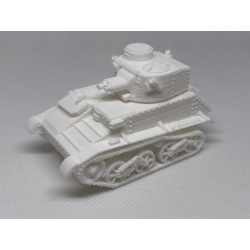 Tank, Light, Mk VI
 £6.99
£6.99
-
 Opel Blitz Truck
£9.99
Opel Blitz Truck
£9.99
-
 GMC CCKW 2½-ton 6x6 truck (swb & lwb)
 £8.99
£8.99
-
 Universal Carrier (Bren Gun Carrier)
£6.99
Universal Carrier (Bren Gun Carrier)
£6.99


Latest Products
-
 Camionetta SPA-Viberti AS43 Reconnaissance Car
£6.99
Camionetta SPA-Viberti AS43 Reconnaissance Car
£6.99 -
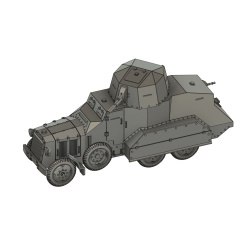 Autoblindo Fiat-Ansaldo AB611 armoured car
£8.99
Autoblindo Fiat-Ansaldo AB611 armoured car
£8.99 -
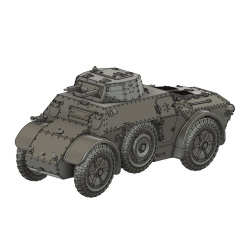 Autoblindo Fiat-Ansaldo 40, 41 and 43 armoured cars
£7.99
Autoblindo Fiat-Ansaldo 40, 41 and 43 armoured cars
£7.99 -
 Aufklarer auf Fgst Panzer Pzkpfw 38(t)
£9.99
Aufklarer auf Fgst Panzer Pzkpfw 38(t)
£9.99 -
 Marder III
£10.99
Marder III
£10.99 -
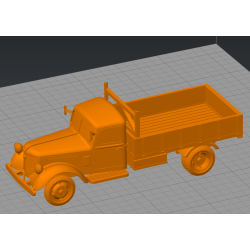 Nissan 180 Truck
£8.99
Nissan 180 Truck
£8.99 -
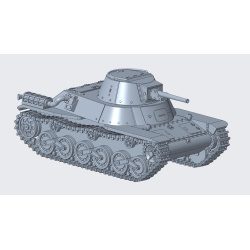 Type 98 Ke-Ni light tank
£7.99
Type 98 Ke-Ni light tank
£7.99 -
 Otsu-Gata Sensha (Renault NC in Japanese Service)
£7.99
Otsu-Gata Sensha (Renault NC in Japanese Service)
£7.99


Mark V Heavy Tank
£9.99
The Mark V was first intended to be a completely new design of tank, of which a wooden mock-up had been finished. However, when the new engine and transmission originally destined for the Mark IV became available in December 1917, the first, more advanced Mark V design was abandoned for fear of disrupting the production run. The designation "Mark V" was switched to an improved version of the Mark IV, equipped with the new systems. The original design of the Mark IV was to be a large improvement on the Mark III but had been scaled back to be a mild improvement because of technical delays. The Mark V thus turned out very similar to the original design of the Mark IV – i.e. a greatly modified Mark III.
Four hundred were built, two hundred each of Males and Females. Several were converted to Hermaphrodites (also known as "Composites") by fitting one male and one female sponson so that each tank had a 6-pounder. This measure was intended to ensure that female tanks would not be outgunned when faced with captured British male tanks in German use or the Germans' own A7V.
The Mark V was first used in the Battle of Hamel on 4 July 1918, when 60 tanks contributed to a successful assault on the German lines by Australian units. It took part in eight further major engagements during the War. A number saw service in the Allied intervention in the Russian Civil War on the White Russian side. Most were captured and used by the Red Army in the Russian Civil War. Four were retained by Estonian forces, and two by Latvia.